Why Brands Are Scaling Campaigns with AI UGC in 2025
By 2025, brands are leveraging AI UGC to churn out more video variations, speed up testing, and cut acquisition costs—all without needing more creators.
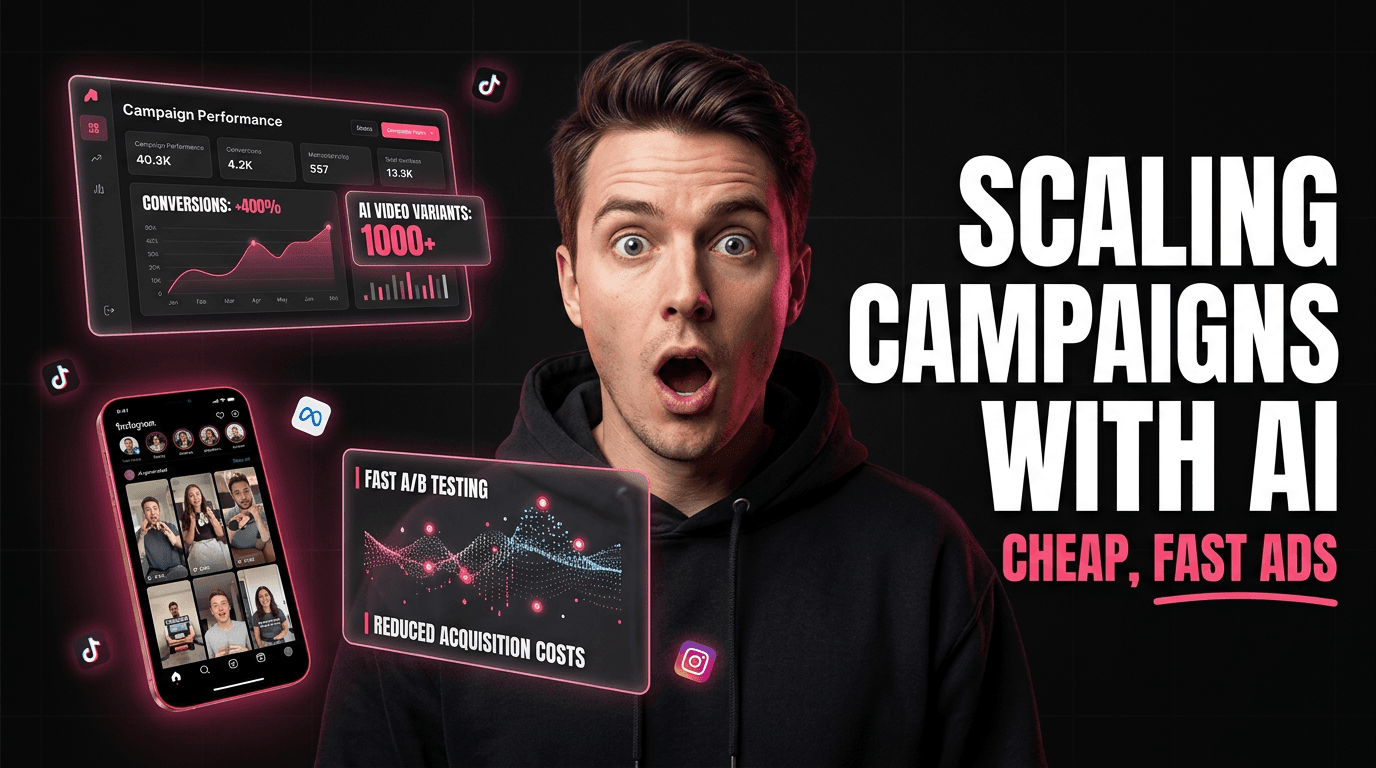
In 2025, brands scaling their ad campaigns aren't hiring dozens of UGC creators anymore. They're using an AI UGC video generator to churn out video variations in just a few hours, at a fraction of the cost of traditional shoots. The result? More creatives tested, faster iterations, and a CPA that's plummeting.
AI UGC is about generating ad videos in the "user content" style using AI avatars, automated scripts, and personalization tools. By 2025, it's not just a gimmick—it's the engine driving performance teams' scalability.
What is AI UGC and why is it booming in 2025?
AI UGC refers to ad videos generated by artificial intelligence that mimic the format of content created by real users. Instead of briefing a creator, waiting for their content, approving it, and then editing it, you hand the script over to a platform that generates the video with a realistic AI avatar, a natural tone, and an integrated CTA.
Why is this trend exploding now? Three factors are at play:
- Traditional UGC production costs are rising. Hiring a UGC creator costs between 150 and 500 euros per video. Multiply that by 20 variations for an A/B test, and the budget quickly becomes prohibitive.
- Advertising algorithms (Meta, TikTok, YouTube) reward creative volume. The more variations you test, the quicker you find the winning combination.
- The quality of AI UGC videos has crossed a credibility threshold. Today's avatars pass the scroll test: the average user can't tell an AI avatar from a real creator in a 15-second vertical format.
89% of marketers involved in influencer marketing plan to increase or maintain their investments in 2025, with 17% planning to jump in for the first time (Taggbox). AI UGC is capturing a growing share of these budgets because it offers the same perceived authenticity with unmatched scalability.
How brands use AI UGC ads to scale
Scaling an ad campaign isn't just about spending more. It's about multiplying creative angles, hooks, formats, and messages to find what performs best for each audience segment. AI UGC ads make this possible without blowing up timelines or budgets.
Here's the typical workflow for a team scaling with AI UGC:
- Write 5 to 10 scripts based on pain points identified by the product team or customer feedback
- Generate variations with different avatars, voice tones, and hooks using an AI UGC creator like Hoox
- Export with integrated CTA (product link, promo code, sign-up) directly in the video
- Launch in A/B test on Meta Ads, TikTok Ads, or YouTube Shorts
- Rapid iteration: underperforming variations are swapped out in minutes, not days
This process, which used to take two to three weeks with a traditional production team, is now completed in a day. For e-commerce teams launching weekly promotions or SaaS firms testing messages by persona, it's a game-changer.
NordVPN is a prime example of the power of creative volume: with 598 sponsored videos, the brand generated 5.7 million likes and 91.5 million views, reaching 2.2 billion (Taggbox). Imagine applying this volume logic to AI-generated UGC ads produced in hours instead of months.
Will AI replace UGC creators?
No. AI isn't replacing human UGC creators; it's complementing their work by taking over low-value production tasks.
A human creator remains irreplaceable for campaigns that require authentic product experience, personal storytelling, or an engaged community. Micro-influencers still boast exceptional engagement rates, sometimes up to 59.4% on Instagram (Taggbox).
But for pure acquisition campaigns, where you need 30 variations of the same promise with different hooks, AI UGC marketing is more efficient. You can dive deeper into this distinction in our comparison AI UGC vs Traditional UGC in Performance Ads.
The smart strategy in 2025: use human creators for high-emotional-value content and AI UGC for testing volume and rapid iteration.
What are the best AI UGC tools for brands?
Several platforms are positioning themselves in the AI UGC creator market: HeyGen, Creatify, Arcade, and Cantina. Each has its strengths, but not all are designed for ad performance.
Hoox stands out as the platform specialized in AI UGC ads for marketing teams. While other tools generate generic videos, Hoox allows you to:
- Create personalized avatars aligned with your brand identity
- Generate AI UGC videos with an integrated CTA directly in the creative
- Produce dozens of variations in a few hours, without shooting or human actors
- Adapt each video by language, market, or audience segment
For teams seeking an AI UGC video generator focused on conversion rather than just a video creation tool, Hoox is built for the acquisition workflow: from script to ad-ready creative.
If you want to understand the technology behind this process, our guide details how AI UGC video generation works.
AI UGC for e-commerce and SaaS: real-world use cases
AI UGC for e-commerce is the most mature use case. DTC brands use it to:
- Test 10 different hooks on the same best-selling product
- Create localized videos for each European market without hiring local creators
- Launch seasonal creatives (sales, Black Friday, holidays) in hours instead of planning weeks ahead
For SaaS, AI UGC for SaaS addresses a different need: explaining a complex feature in a native, engaging format. An AI avatar can present a product use case in 30 seconds with a conversational tone, then direct viewers to a demo. It's more effective than a corporate video and faster to produce than a filmed customer testimonial.
In both cases, the logic is the same: creating UGC content with AI allows for more testing, faster learning, and allocating human budgets to higher-impact initiatives.
Are AI UGC ads legal?
Yes, AI UGC ads are legal in the vast majority of jurisdictions, as long as you follow a few clear rules:
- Image rights: use proprietary or licensed AI avatars, never a real person's face without explicit consent. Platforms like Hoox provide avatars with included rights.
- Ad transparency: standard advertising regulations apply. Your sponsored content must be identified as such, whether produced by a human or AI.
- Product legal disclaimers: sector-specific obligations (health, finance, food) remain the same regardless of production method.
The legal framework is evolving, especially with the European AI Act, but producing ad content with licensed AI avatars remains perfectly compliant. The main legal risk involves unauthorized use of a real person's voice or face, which professional tools are designed to avoid by default.
FAQ
What is AI UGC?
AI UGC (User Generated Content by artificial intelligence) refers to ad videos in the "user content" format produced by AI avatars instead of real creators. These videos replicate the authentic and spontaneous tone of classic UGC but are generated in minutes via specialized platforms. For a complete definition, check out our article on the benefits of AI UGC for brands.
How to make AI UGC ads?
To create AI UGC ads, you need a conversion-oriented script, an AI UGC ad creator like Hoox, and a clear creative brief. Select an avatar, paste your script, choose the format (9:16 for TikTok/Reels, 1:1 for the feed), and export. Hoox lets you add a CTA directly in the video to maximize click-through rates.
What are the benefits of using AI for managing user-generated content at scale?
The main benefits are production speed (dozens of variations in a few hours), cost reduction (no casting, no shooting, no outsourced editing), and rapid iteration capability for A/B tests. Teams using a UGC AI video maker can test more creative angles per week than a traditional team can in a month.
Is AI UGC legal?
Yes. AI UGC ads are legal as long as you use licensed avatars, adhere to advertising transparency rules, and do not replicate a person's face or voice without consent. Professional platforms like Hoox incorporate these protections by default in their avatars and terms of use.
Scale without multiplying constraints
The brands that succeed in 2025 aren't producing more content with more resources. They're producing more content with less friction. AI UGC is the lever that makes this possible: more variations, more tests, more data to optimize, all in a few hours instead of several weeks.
Hoox was designed for this workflow. If you want to create your first AI UGC videos and test scalability on your campaigns, the platform lets you generate your first creatives in minutes, with personalized avatars and integrated CTAs.